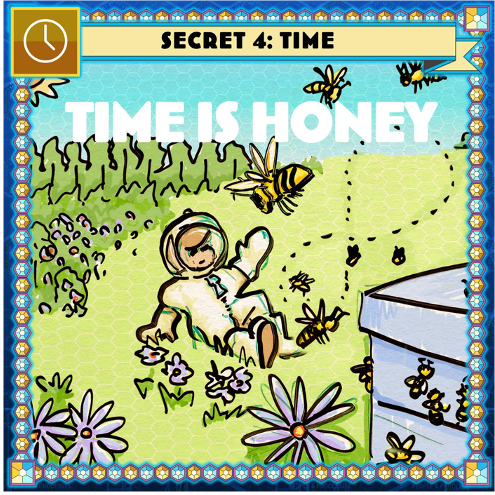
Time is Honey: Observation 38. Biological work costs Energy. 2020

Observation:
The most important observation in this story is the parallel drawn between the efficient energy management of bees and human business practices. Bees, through their waggle dance, communicate valuable information about energy sources (nectar) to other bees, optimizing their collective effort. Similarly, the narrator's junk business operates on efficient communication and coordination, mirroring the bees' strategy to maximize energy (money) gain.
The Lesson:
Efficient communication and coordination in resource management, as demonstrated by bees, are vital principles that can be applied to human businesses for optimal performance.
How this is Helpful:
Communication: Streamlines efforts in team environments.
Coordination: Enhances productivity and resource management.
Observation: Learning from nature to improve human practices.
Questions for Reflection:
How Communicate? How can I improve communication to enhance efficiency in my activities?
Where Coordinate? In what areas of my life or work can I better coordinate efforts?
Nature's Lessons: What other natural processes can teach me about efficiency and sustainability?
| Function | Bee/Nature System (Flowers as Customers) |
Human Business System (Junk Removal Franchise, Location A) |
Energy Cost (kcal/sec + equiv) |
||||||||||||||||||||||||||||||||||||||||||||||||||||||||||||||||||||||||||||||
|---|---|---|---|---|---|---|---|---|---|---|---|---|---|---|---|---|---|---|---|---|---|---|---|---|---|---|---|---|---|---|---|---|---|---|---|---|---|---|---|---|---|---|---|---|---|---|---|---|---|---|---|---|---|---|---|---|---|---|---|---|---|---|---|---|---|---|---|---|---|---|---|---|---|---|---|---|---|---|---|---|---|
| Core Exchange |
• Flowers "pay" bees in nectar to move DNA—work done, energy flows both ways • Calorie cost = life: bee burns fuel, flower gets reproduction |
• Customers "pay" us in dollars to move junk—work done, money flows both ways • Calorie cost = profit: crew burns fuel + sweat, space gets cleared |
Bee: ~0.1 kcal/sec flight (nectar = 0.5g equiv)🐝 Honey → 💰 Money: Energy System Mapping


Previous
Previous
Sugar is Energy: Observation 37. Light is Honey. 2020Next
Next
Bee Wisdom: Observation 39. Secrets of the Bees. 2020 |